My goal for Culinary Combat was to create a simple, proof-of-concept game project to improve my game design skills, using the following themes:
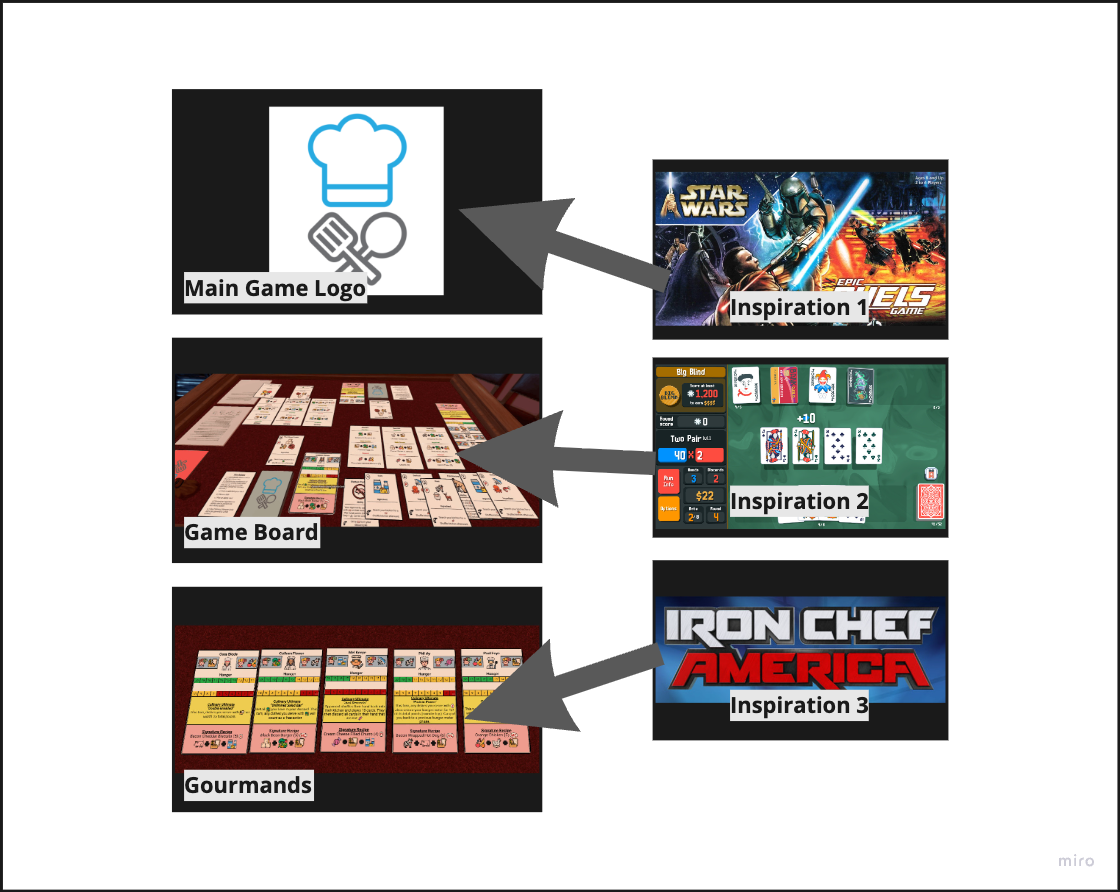
Simple PVP – Some of my favorite PVP board games had simple to understand rules such as Star Wars: Epic Duels
Poker Inspired Gameplay – I also wanted to incorporate poker style gameplay with a twist, such as Balatro
Food/Cooking Theme – I love cooking competition shows like Iron chef and wanted to make something similar as a game
Throughout this process, I sought regular feedback from Jeremiah Franczyk (Lord of the Rings Online), who helped me learn how to combine various game design techniques to create an immersive and accessible game experience.
Overview & Technique Highlights
Game Premise:
In the land of Taystee, there are 5 warring kingdoms at constant odds with each other. Though in this world, battles are not fought with weapons, but instead with meals! Each Kingdom has their own culinary warriors that they call Gourmands that fight in these battles.
Combining card battling mechanics with a light-hearted cartoonish fantasy world, players must use their deck of ingredients cards to create dishes from recipe cards to empty your opponent’s hunger meter first. The winner of these battles is the one who can create dishes that satisfy the hunger of their opponent first using the ingredients they have at their disposal, along with special ability cards and unique character abilities.
Technique Highlight #1: Dish Creation Mechanic
Visualization of Mechanic
Goal: I wanted to make a simple mechanic for creating dishes that allowed for creativity and player expression.
Result: I chose to create a card melding mechanic akin to basic card games such as poker.
Techniques
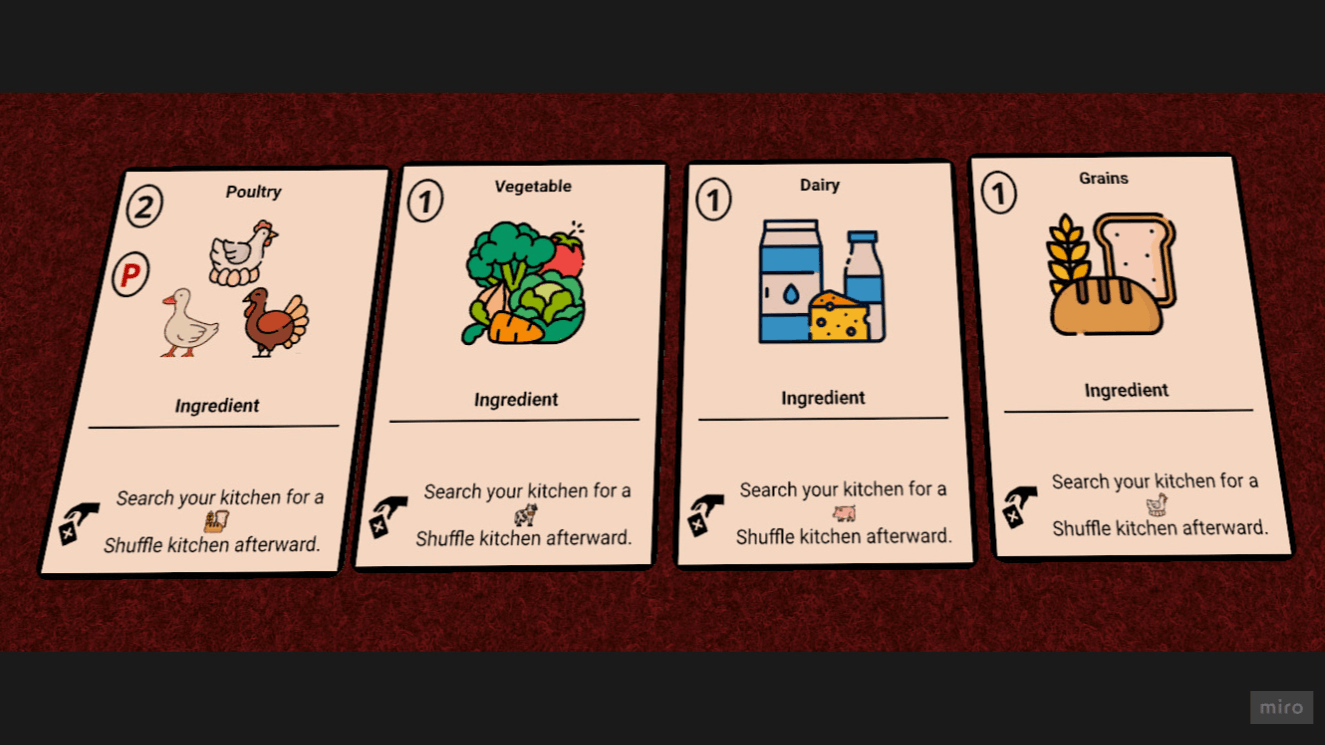
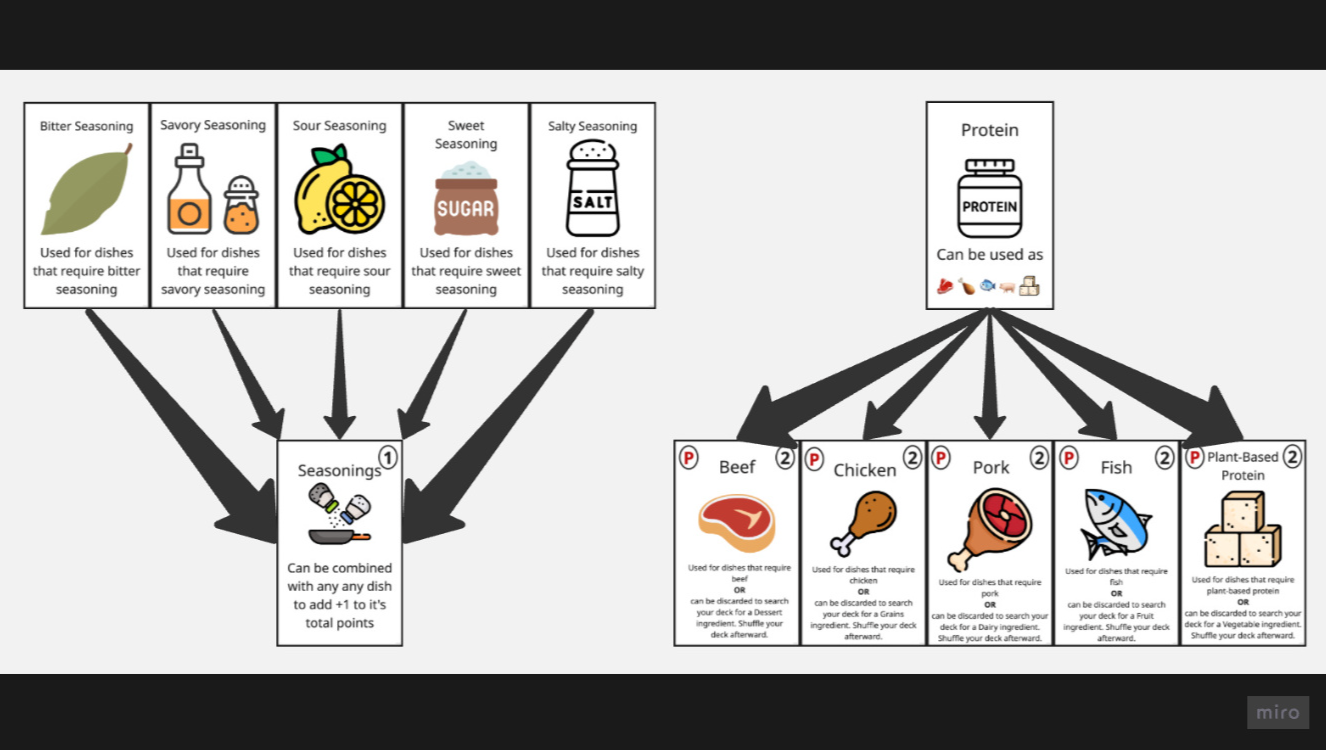
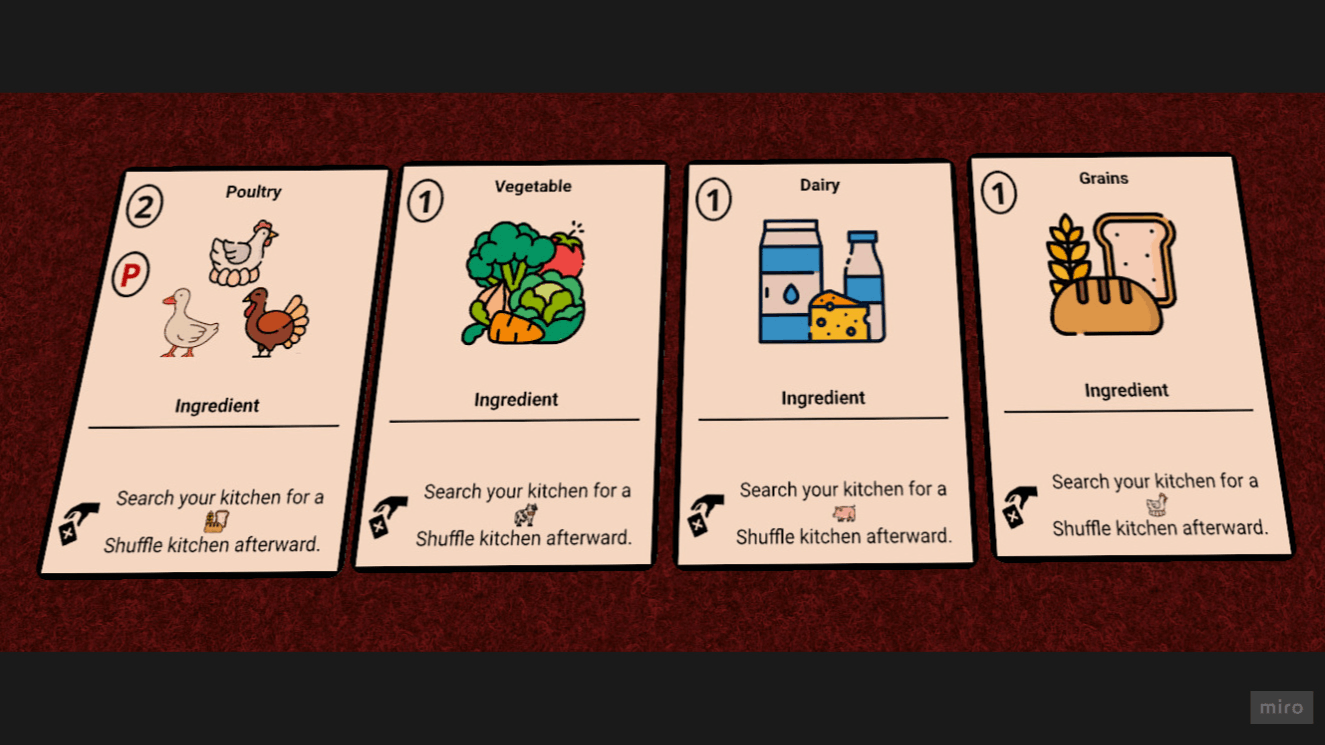
Broke down ingredients into simple to understand categories for each card.
Used the basic concept of melding certain cards together to create hands of varying scores.
Players are not limited to pre-determined recipes and can use their own creativity and cooking knowledge to decide what dish their ingredients make.
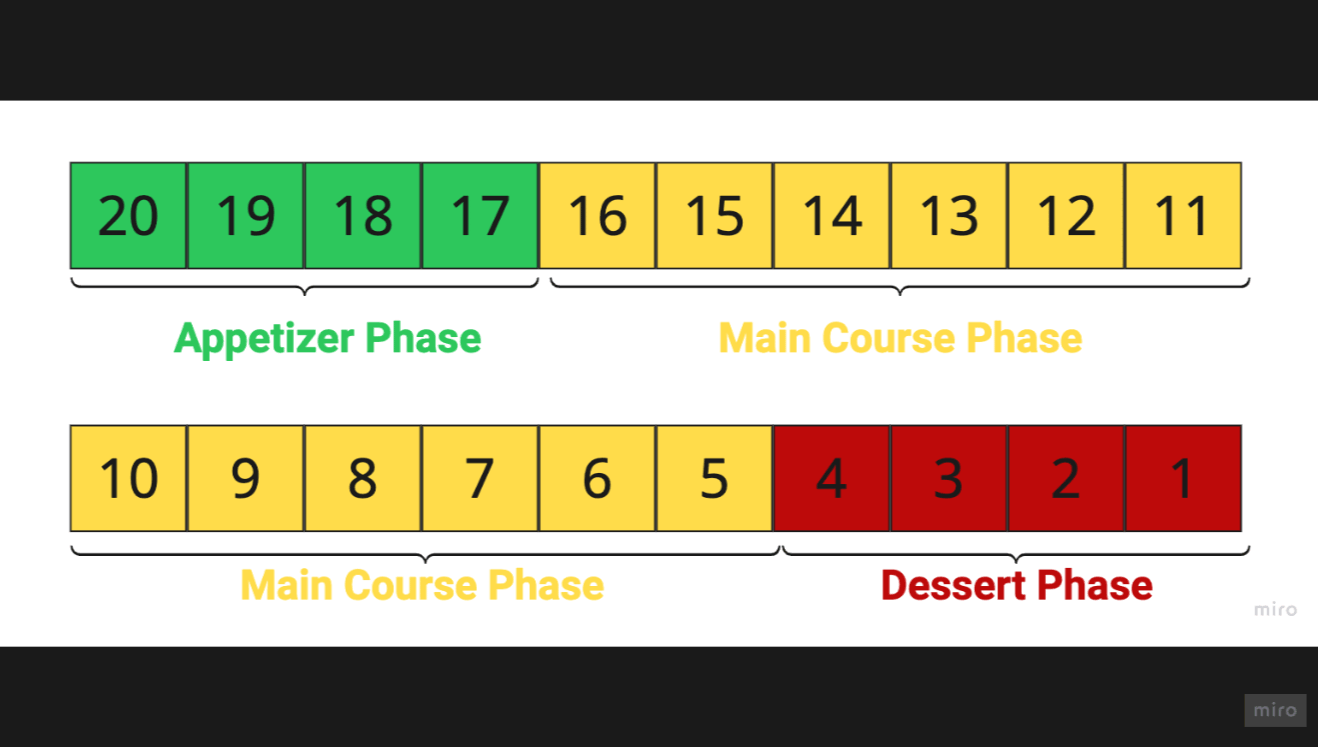
Technique Highlight #2: Hunger Meter
Visualization of Mechanic
Goal: To create a health/damage meter mechanic that was non-combative and offered smooth pacing to the game.
Result: Created a hunger meter mechanic broken down into various course phases to symbolize a players health in a non-combative way.
Techniques
Used the already understood conceptof meal courses, I broke it down into each phase of players hunger/health.
Adding different courses with different dish requirements adds a layer of strategy on how and when to use the ingredients in your hand.
Prevents players from making dishes that may be too powerful and allows the opponent an opportunity to retaliate and keep playing.
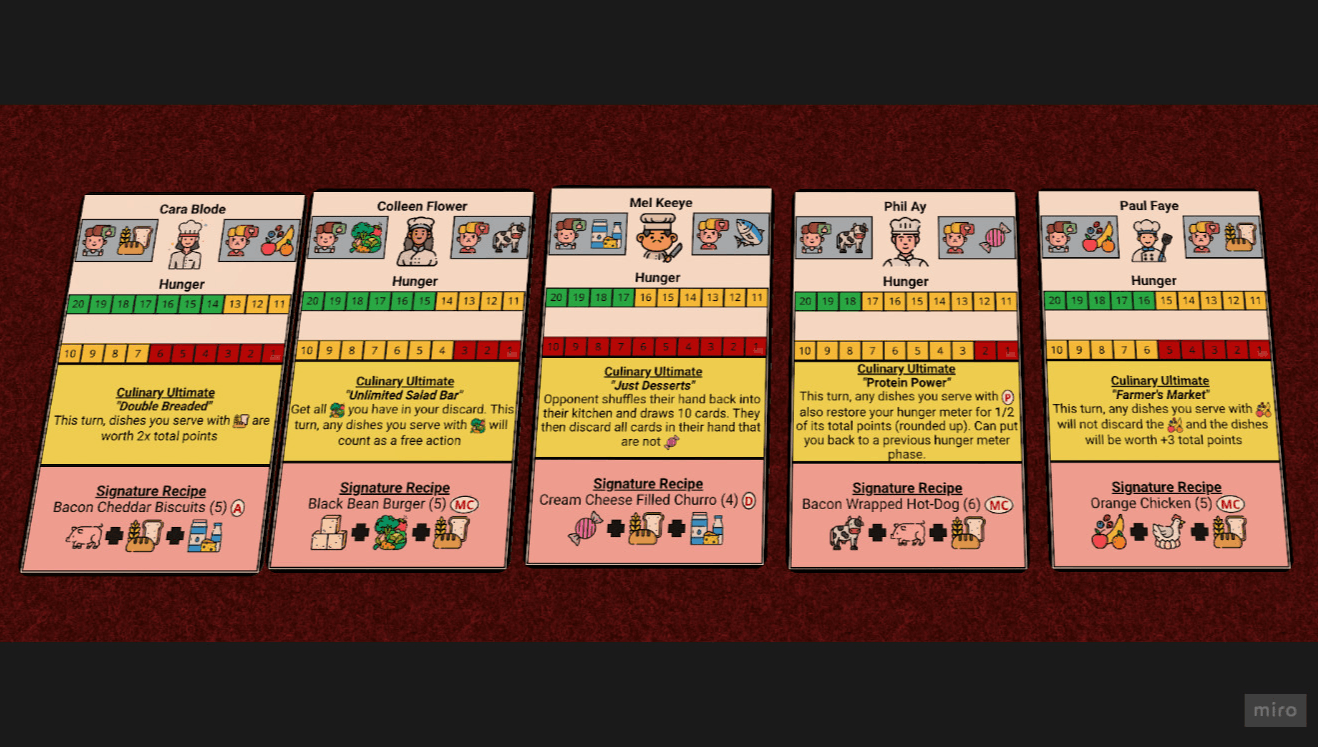
Technique Highlight #3: Player Gourmands
Visualization of Mechanic
Goal: To create a way for players to have unique abilities and varied playstyles outside of what they have within their deck.
Result: Create unique characters with different abilities that allowed players to chose their style of play.
Techniques
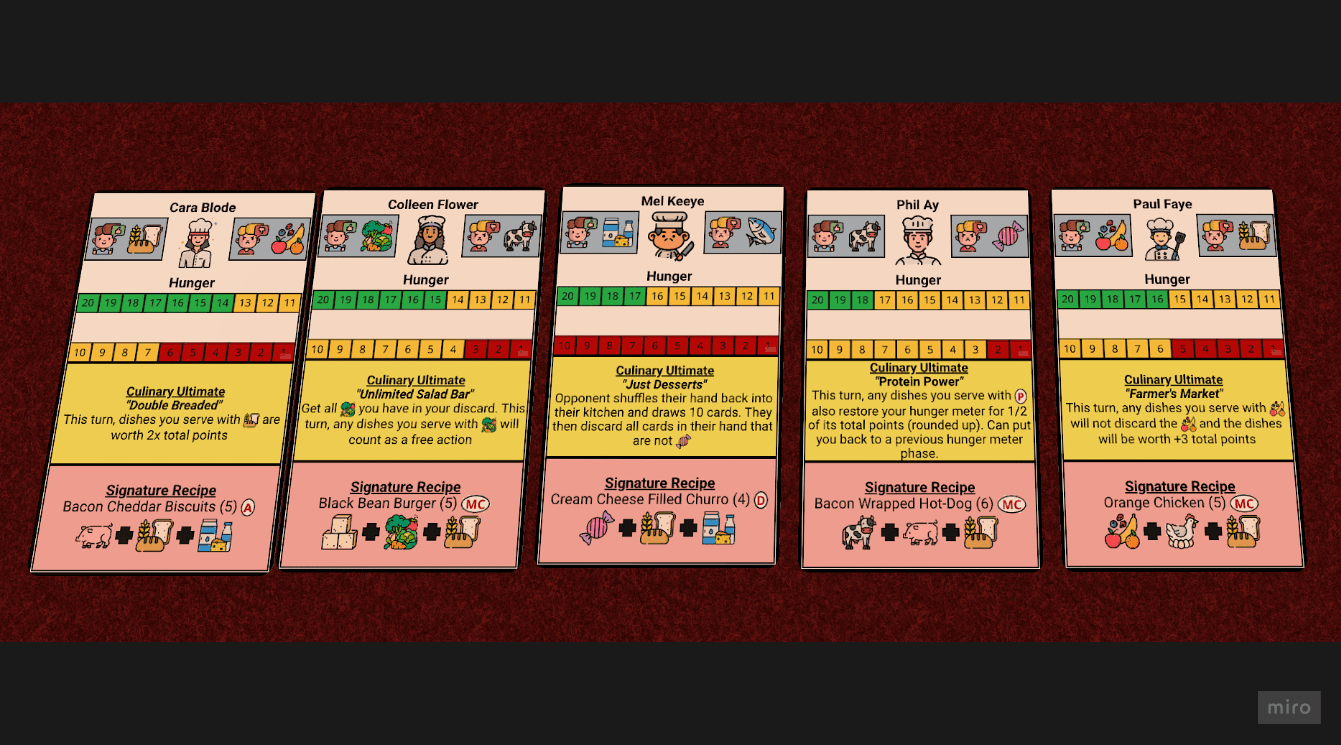
Created unique hunger meters for each Gourmand to create for different dish serving strategies.
Added unique likes and dislikes for each Gourmand to allow for different play styles and encourage different strategies.
Created a comeback mechanic in the form of powerful unique Culinary Ultimate abilities for each Gourmand.
Process Breakdown
1. Research, Ideation & Planning
I wanted to create a card battling game with simple rules and decks for those who feel overwhelmed in creating decks with a food theme anyone could enjoy.
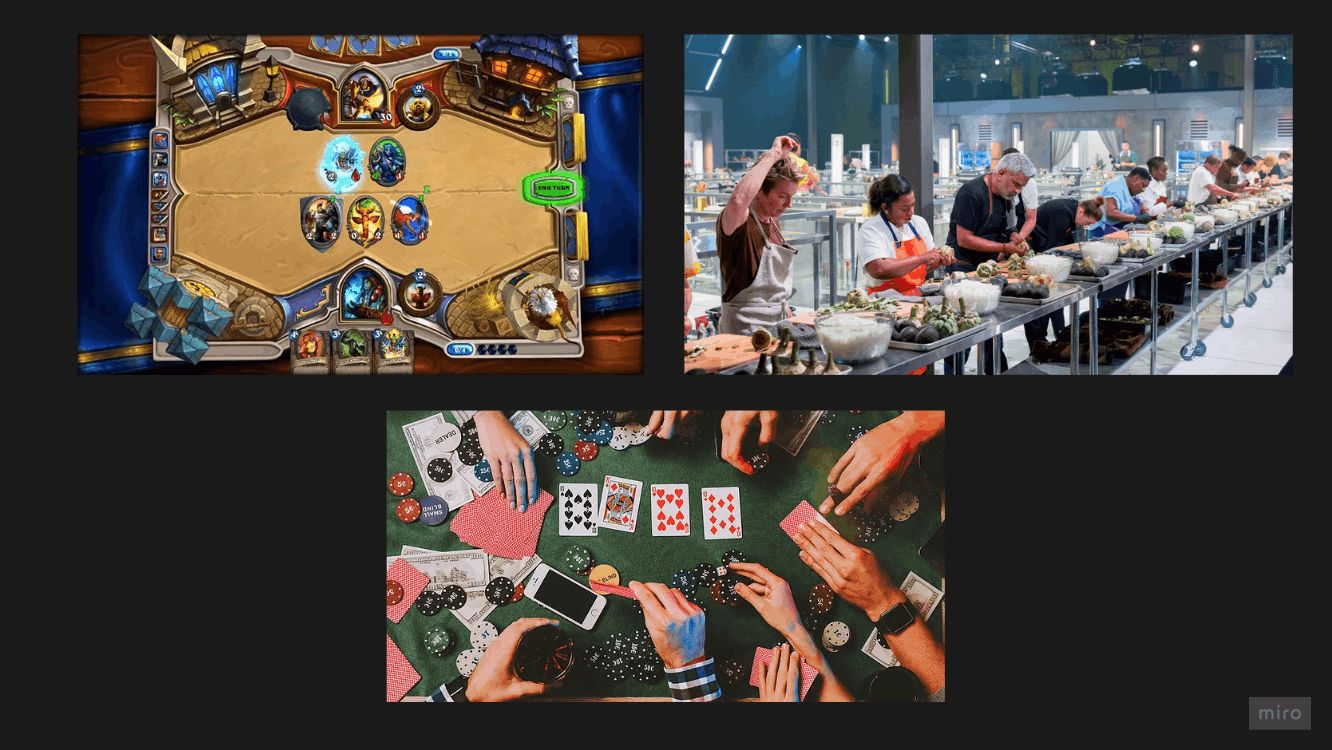
Analyzing Games: I took the pre-made deck and unique character selection from Star Wars: Epic Duels, character abilities from Hearthstone, and the act of combining cards to create hands like in Poker or Balatro.
Ideating Mechanics: I wanted to make playing simple by using tried and true mechanics that are familiar to those who have played traditional card games and added a little more depth.
Resonant Theming: Cooking / Eating, is something everyone can enjoy and has a huge potential to piggyback off of real life recipes when creating dishes with your ingredient cards and its competitive nature can give the same level of resonance as watching a cooking competition.
2: Design Document - Rulebook
Premise: When I first thought of Culinary combat I wanted to focus on specific mechanics. This included:
A simple card battler game that’s easy to pick up and play.
Gameplay that rewards the player’s creativity.
Adding in unique character options for different playstyles.
A type of combat that could be enjoyable for players of all ages and cultures.
Theme: Since I wanted to have something that everyone could relate to, I immediately gravitated towards food and that led me to cooking competition shows. I then thought about how it would be if these kind of competitions were used in battles in fantasy kingdoms and would they battle this way. By making it feel like that you “fight” with food, it could have a fun unique twist on those type of competitions.
3. Prototyping
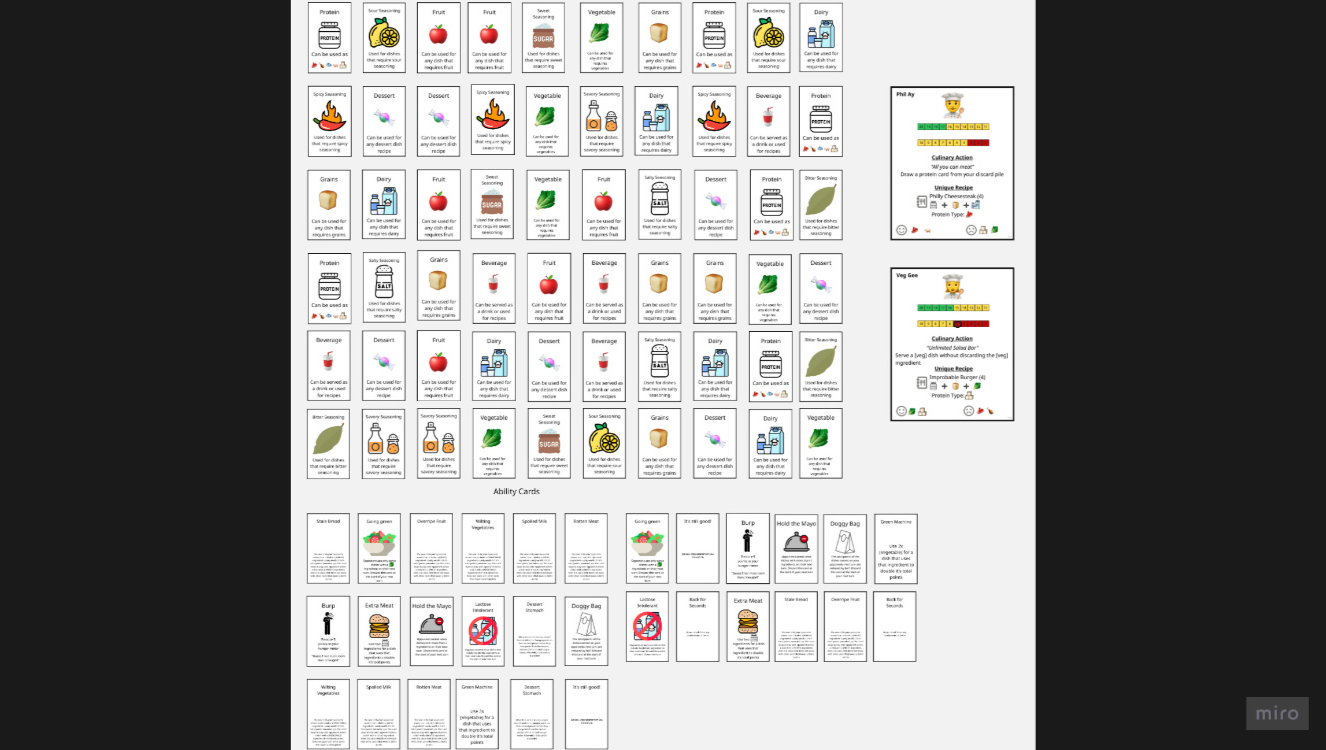
Miro Prototype
Result: Realized that the core loop was too slow paced and had an imbalance in the deck’s card ratio.
Goal: Create a prototype of the game in Miro to see if my gameplay loop had good pacing & engagement.
Solution:
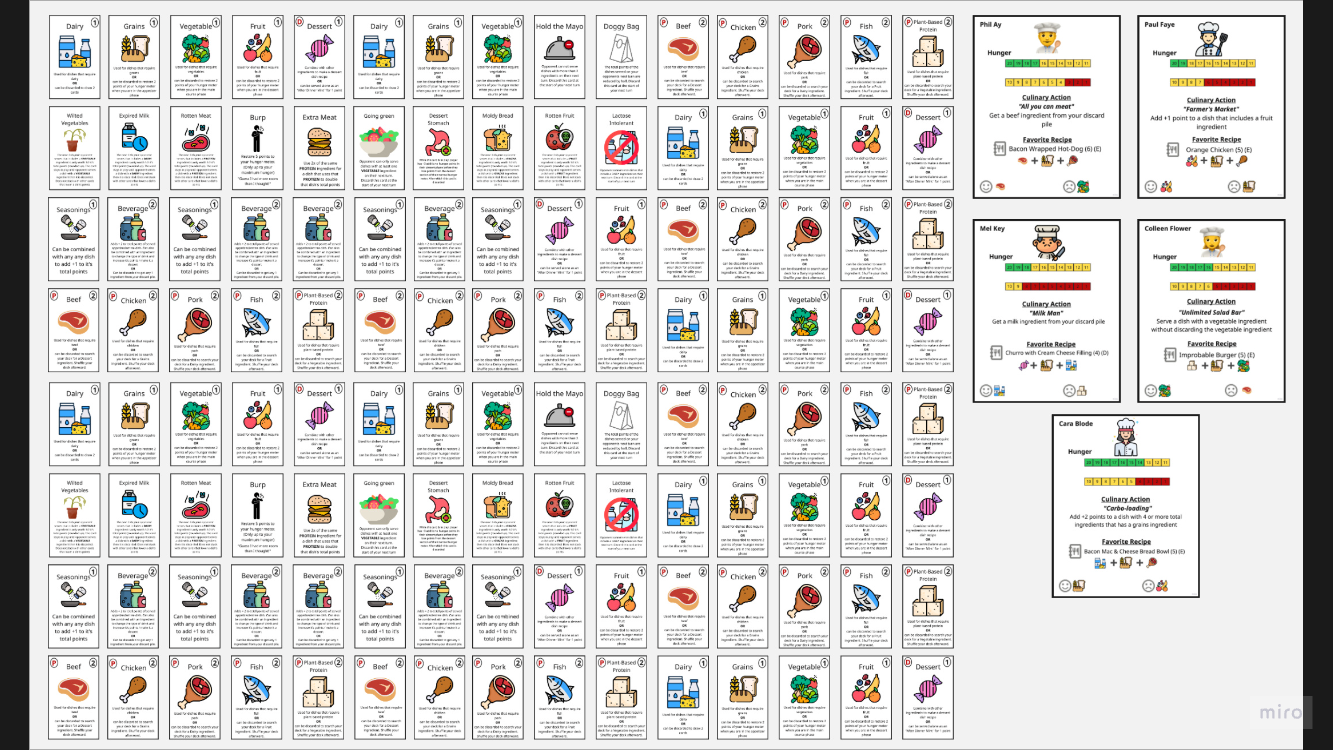
I created placeholder cards for all the ingredients, abilities, and recipes.
I created character cards with different characteristics to test basic strategies.
Rapid Prototype Highlight #1
Result: Game flowed faster with less wasted turns and more room for creativity.
Goal: Increase game pacing by streamlining creating dishes in the game without causing exploits.
Solution:
Made it easier to make dishes by removing recipe cards requirement.
Split up Protein card to each separate type of protein.
Consolidated different seasonings into a “one size fits all” seasoning card.
Reconfigured number of cards in deck.
Rapid Prototype Highlight #2
Result: Improved game pacing and added more options for players.
Goal: Find a way to make cards usable not just for making dishes and encourage using ability cards.
Solution:
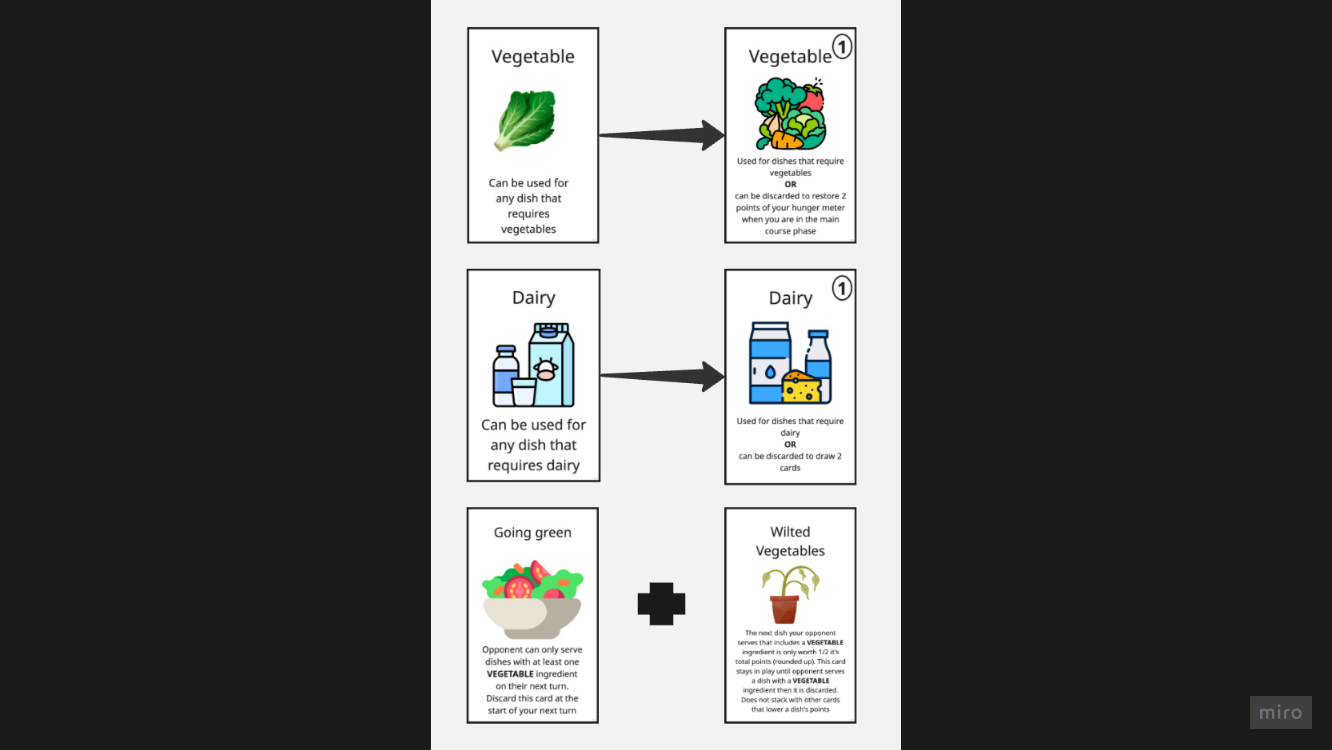
Added a secondary function to each ingredient card outside of making dishes.
Added ability cards to main deck instead of a separate deck.
Added more options for synergy with ability cards.
4. The First Interactable
Result: Blended card battling mechanics with poker style combinations in a simple to use deck.
Goal: Create a playable tabletop simulator protoype with a full deck and multiple characters to choose from.
Implementation:
Mechanic Synergy 1: Cooking as a poker style card game – you have to collect specific ingredient cards to create a dish recipe.
Mechanic Synergy 2: Studied other simple card battler games, such as the Pokemon TCG, on how to balance character weaknesses/strengths and special abilities.
Narrative Synergy: Studied cooking competition shows with ingredient limits to see what creativity players could have.
5: Playtest & Key Iterations
Playtest #1 Highlight
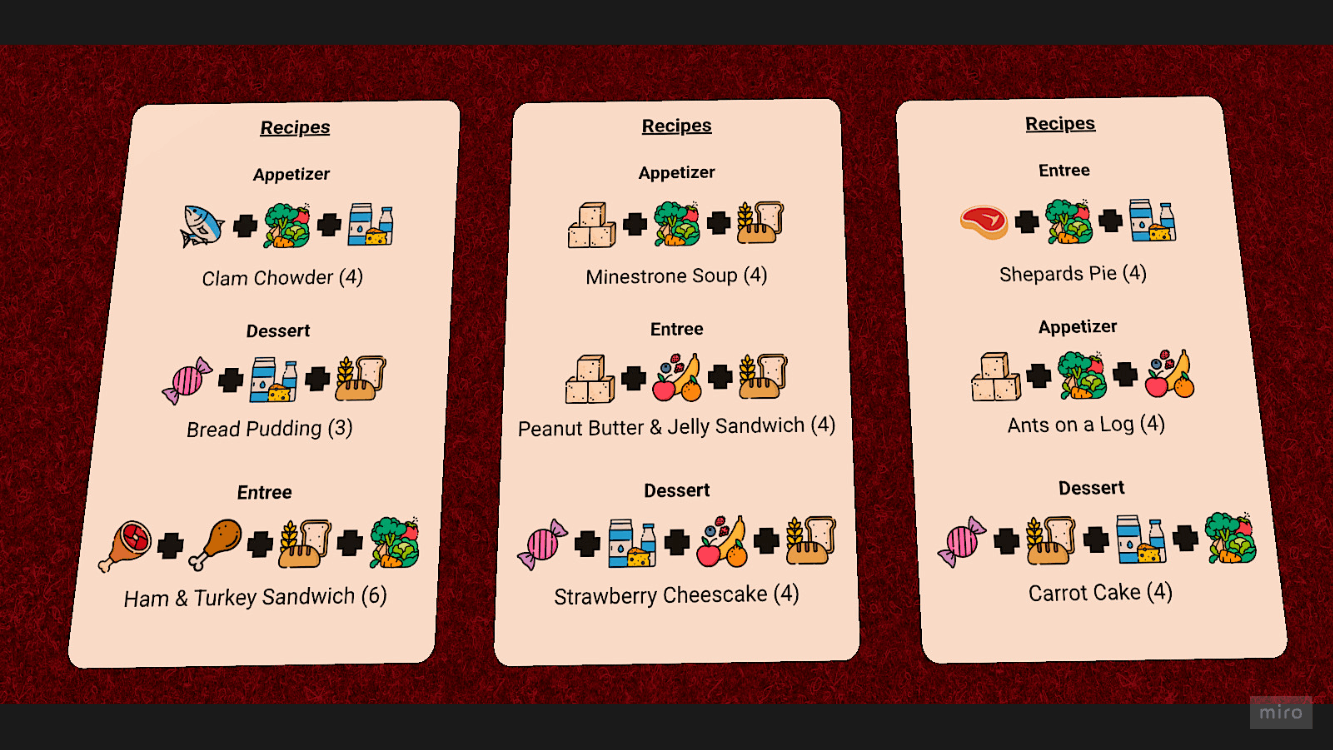
Optional Recipe Cards
Playtest Recording
Result: Players enjoyed the gameplay of creating their own unique dishes with the ingredients they had available.
Feedback & Problem: Players with little or no cooking skill found it difficult to think of dish ideas and could feel overwhelmed.
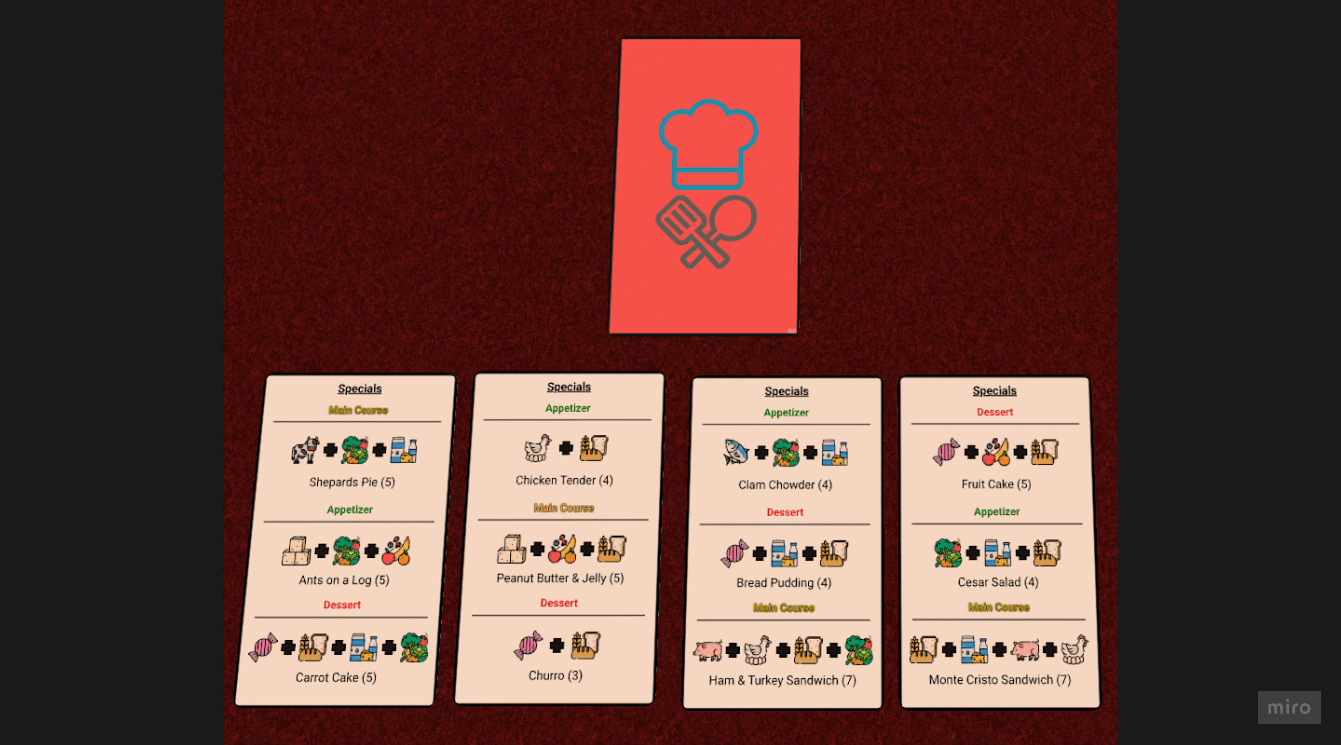
Solutions: Added optional recipe hint cards with dish ideas that the players could use if they could not think of ideas for dishes.
Playtest #2 Highlight
Updated Cards
Playtest Recording
Result: Players enjoyed having the freedom to use their creativity in making unique, and sometimes strange, dishes.
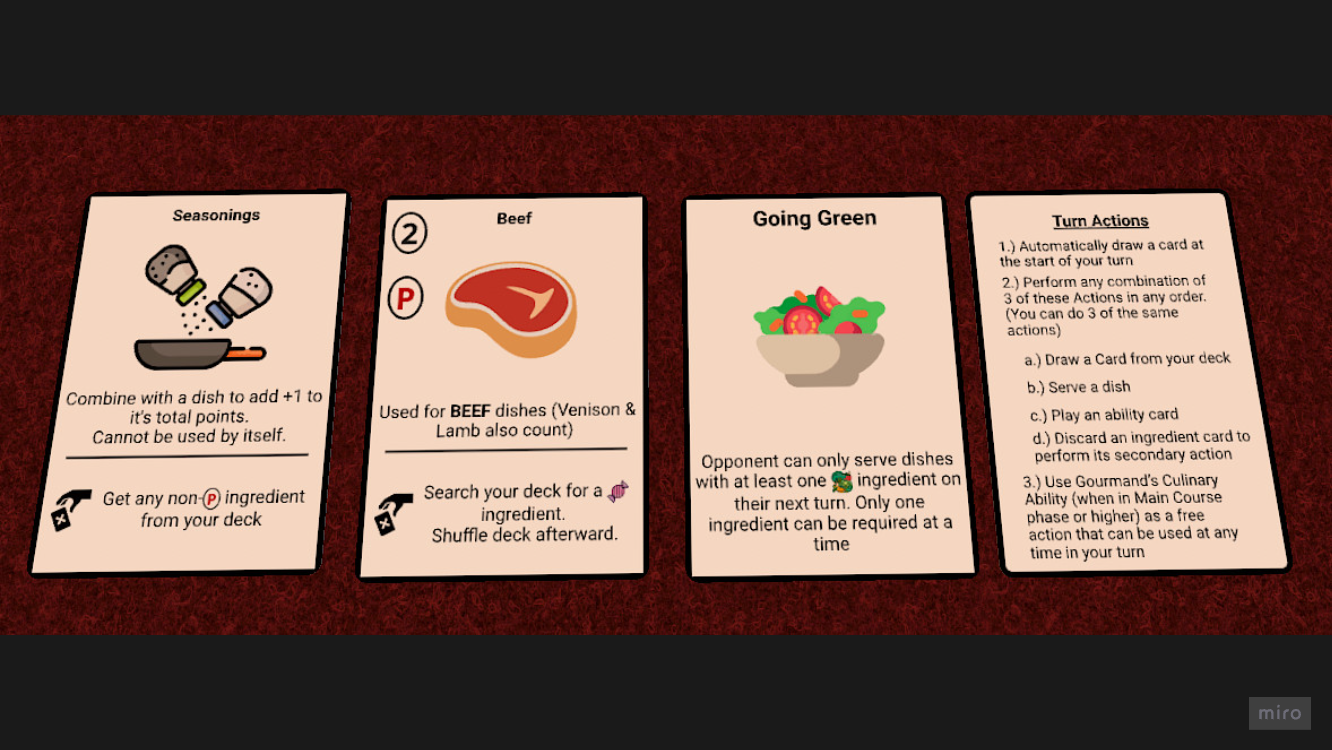
Feedback & Problem: Players were confused on how certain cards worked and what actions they could do on their turns.
Solutions: Used symbols and reworded card descriptions to make them easier to quickly understand. I also added a turn actions reminder card.
Playtest #3 Highlight
Updated Icons on Cards
Playtest Recording
Result: Players enjoyed the recipe creation aspect and started to come up with more unique dishes.
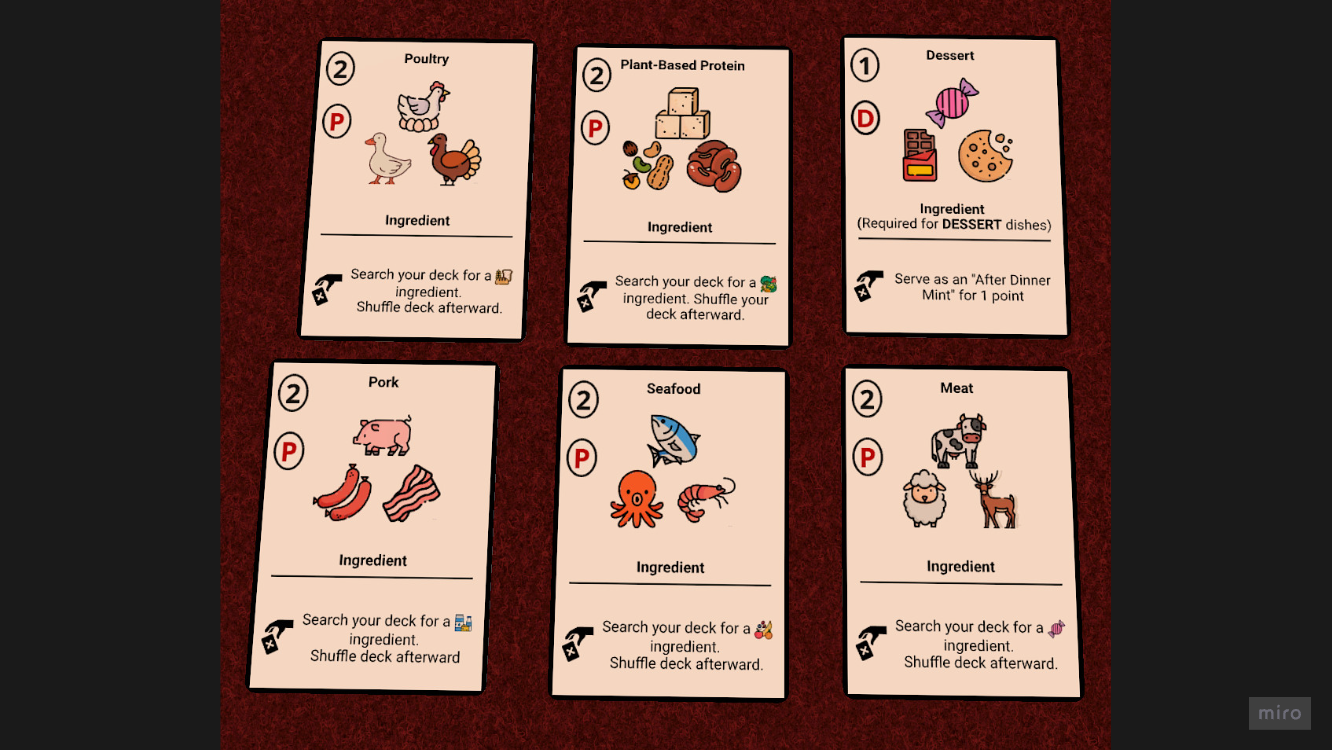
Feedback & Problem: Players had trouble coming up with recipes due to not realizing that ingredient categories had more options.
Solutions: Updated ingredient cards to broader categories and added other icons to help players come up with recipes.
6. Polished Portfolio Piece
Dish Creation
Gourmands
Special Menu Deck
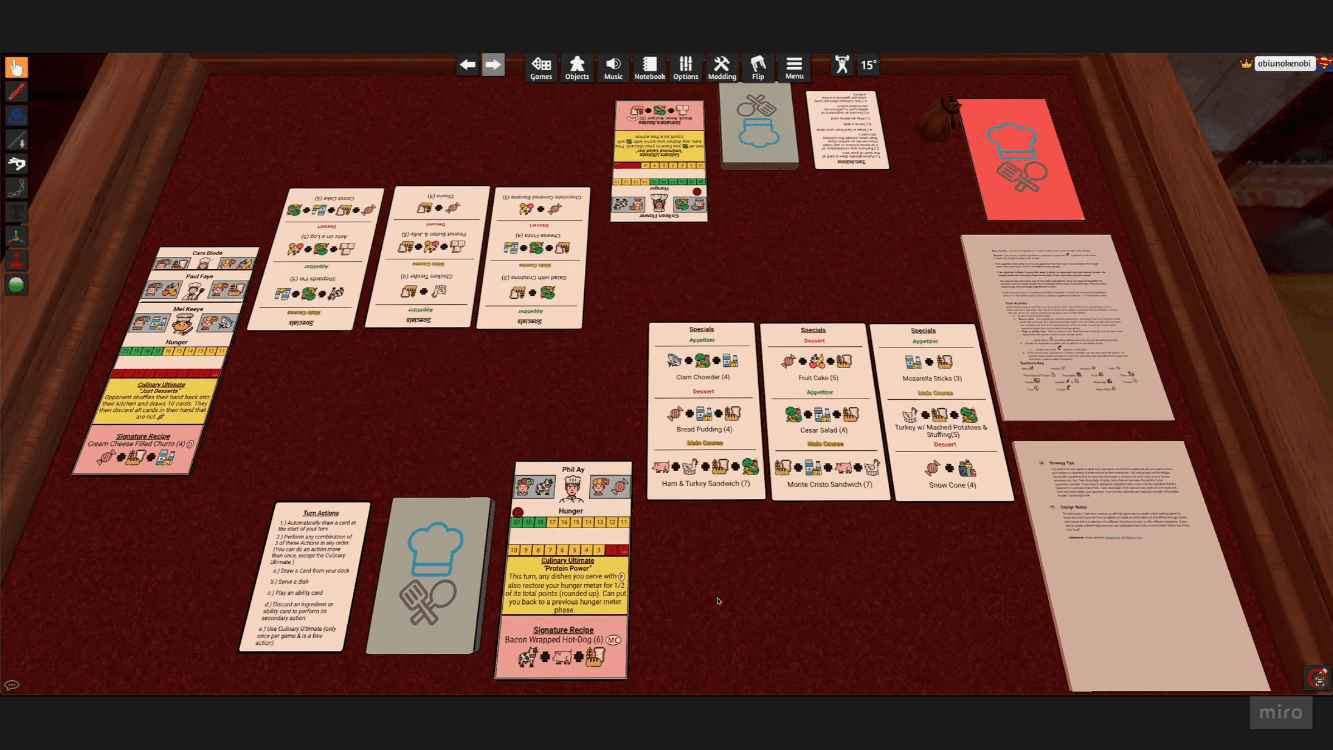
Full Board
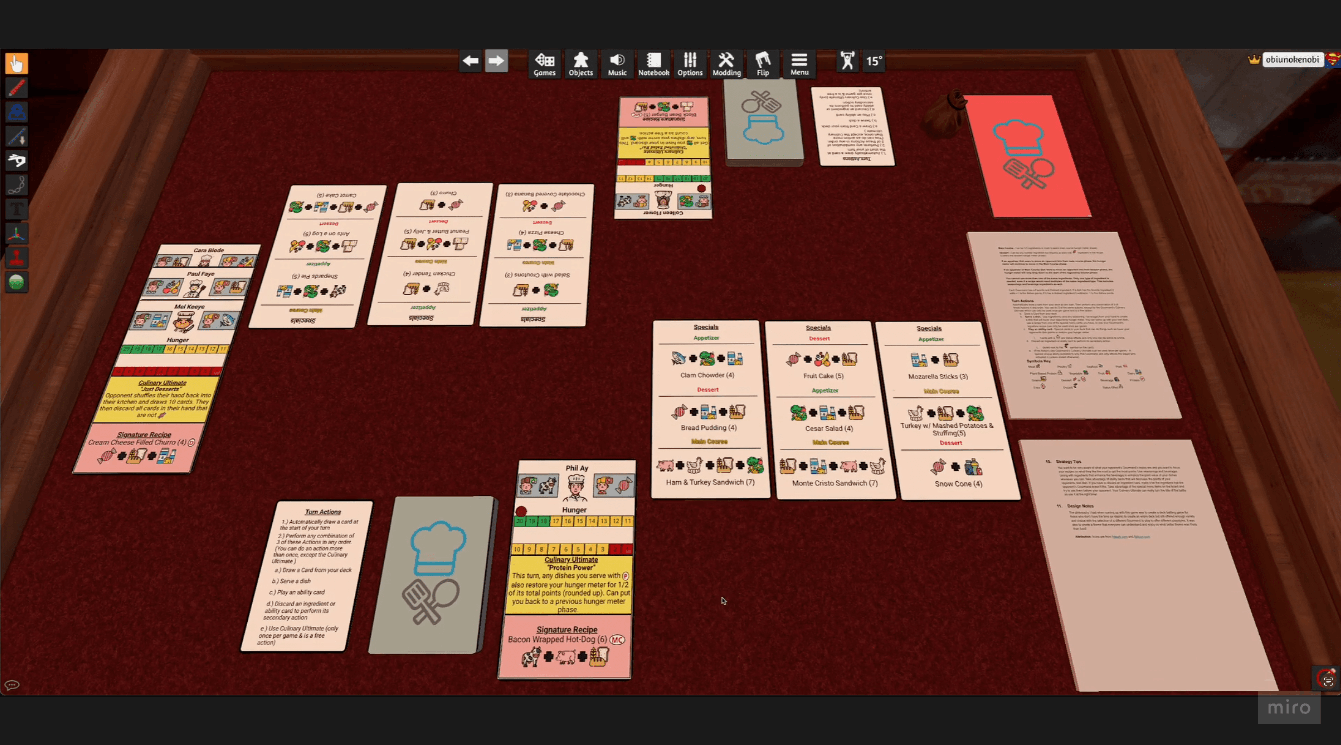
Results: Made playable prototype of my game in Tabletop Simulator.
Goal: Create an easy to understand PVP card-battler game with creative cooking elements, for Tabletop Simulator.
Execution:
Dish Creation: Players decide what kind of dishes they make with their ingredients which allows for endless creativity and player expression.
Gourmands: Added unique characters that allow for different styles of gameplay to choose from.
Special Menu Deck: Players with less creativity have options to choose from when creating a dish in a pinch.
7. Full game playthrough
Table of Contents
Add a header to begin generating the table of contents